
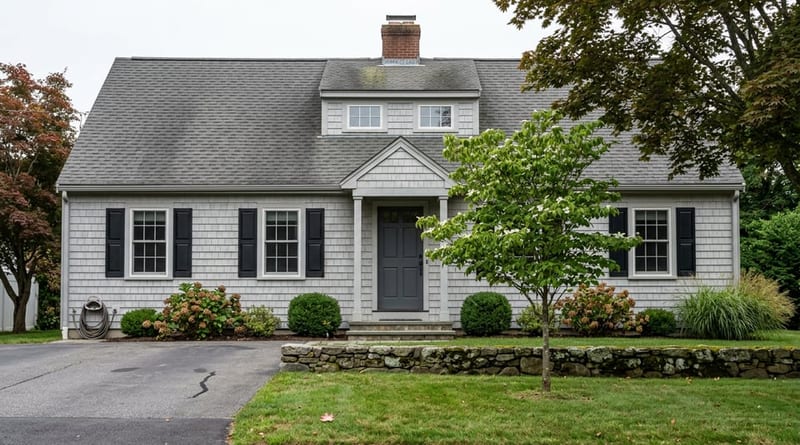
Nassau County's median single-family price hit $875,000 in June 2026, up 2.9% from a year earlier. Suffolk set a new record at $750,000, up 7.1%. As of early August 2026, inventory across both counties sits near three months of supply, homes are moving in 42 to 44 days, and listings in both counties are still routinely clearing at or above asking price. By almost every measure, this is a seller's market.
None of that protects a signed contract from an oil tank nobody can document or a cesspool that fails inspection. If anything, a fast market makes the gap worse. When a house goes from listing to signed contract in a matter of weeks, there is very little runway left to resolve an environmental surprise before the closing date everyone already agreed to. The sellers who get through this fall without a stall are the ones who settled the tank and septic questions before the sign went up, not after an attorney flagged them.
The Paperwork Changed Under Sellers' Feet
For years, New York sellers had a workaround for the state's Property Condition Disclosure Statement: pay the buyer a $500 credit at closing and skip the form entirely. That option disappeared. New York amended Real Property Law §462 in 2024, eliminating the credit alternative and making the disclosure statement mandatory on nearly every one-to-four-family residential sale in the state. Co-ops and condos remain exempt, since they fall outside fee-simple ownership, but the typical Nassau or Suffolk single-family sale no longer has an easy out.
The current form runs 48 questions, and two of them sit at the center of this piece. Question 36 asks directly what type of sewage system serves the property, and if it's septic or cesspool, the seller has to state the system's age, the date it was last pumped, and how often. A separate section requires disclosure of any past or present above-ground or underground fuel storage tank, whether it's currently in use, where it sits, and whether it has ever leaked.
The statute is blunt about what happens if a seller gets this wrong. A knowingly false or incomplete statement can expose the seller to buyer claims both before and after the deed transfers.
A fast market rewards sellers who already know the answer to the tank and septic question. It punishes the ones who find out during attorney review.
The Tank Question Nobody Budgets For
Long Island has a lot of older housing stock that was heated with oil before conversions to gas became common, which means a meaningful share of homes either have a buried tank still in use, one that was supposedly decommissioned years ago, or one nobody has thought about since the last owner. A standard inspection to determine which of those applies typically runs $300 to $700. That is not the number that worries buyers' attorneys.
The number that worries them is what happens if the tank has actually leaked. Remediation and cleanup for a confirmed release can run anywhere from $10,000 to well over $100,000, depending on how far the contamination has spread through the soil. Firms like Eastern Environmental Solutions, which has worked Long Island oil tank inspections for more than two decades, describe the same pattern seller after seller: an undocumented tank does not necessarily kill a deal, but it reliably delays one, because a buyer's lender wants proof the tank is either sound or properly closed before they will clear funds to close.
That documentation takes time to assemble if you have not already gathered it. Scheduling an inspection two to three months before listing, rather than waiting for a buyer to ask, is the difference between handing over a folder of paperwork at contract signing and scrambling to produce it during a financing deadline.
Nassau's Cesspool Rule Isn't Just a Disclosure Item
Septic and cesspool systems carry a version of this same risk, but in Nassau County it goes further than paperwork. Since 2019, Nassau has required that cesspools located in nitrogen-sensitive zones, generally properties near bays, harbors, or estuaries, be upgraded to an approved nitrogen-reducing system as an actual condition of transfer. That is not a box to check on a disclosure form. In the affected zones, the sale itself can be held up until the upgrade happens.
Suffolk County has its own version. Certain property transfers there, particularly for original, high-capacity, or environmentally sensitive systems, can trigger a requirement to upgrade to an innovative and alternative treatment system before the deed changes hands.
The scale of the underlying problem is why both counties built these rules. Cesspool inspectors working across Long Island report that 15 to 20 percent of the systems they examine come back failed or near failed, meaning the tank or leach field is at the end of its functional life, and another 5 to 10 percent are hard fails, meaning the system is actively leaking or already non-functional and must be replaced before a closing can proceed at all. Long Island Cesspool Co., which runs inspections across both counties for real estate closings, flags the Nassau nitrogen-sensitive zone requirement on essentially every applicable inspection it performs, because sellers rarely know their address falls inside one until someone checks.
The Money That Can Offset the Fix
The upside, if you get ahead of it, is that grant funding for septic and cesspool replacement on Long Island has expanded meaningfully in the past year.
- Suffolk County's Reclaim Our Water Septic Improvement Program provides a base grant of up to $10,000, and in 2025 Governor Hochul signed legislation raising the state's reimbursement rate for these upgrades to 75 percent, or up to $25,000, alongside $20 million in new state grant funding directed to Suffolk specifically. Combined state and county subsidies can reach roughly $45,000 for an eligible property.
- Nassau County's Septic Environmental Program to Improve Cleanliness, administered by the Nassau County Soil and Water Conservation District since it launched in May 2021, is advertised at up to $20,000 on the county's own program page, though the conservation district's homeowner materials cite figures as high as $35,000. Because the two figures do not agree, anyone counting on this money should confirm the current cap directly with the county before budgeting around it.
Both programs require a valid certificate of occupancy, a property still served by an existing septic system or cesspool rather than a public sewer connection, and no outstanding property tax liens.
Even with grant money applied, a Long Island septic or I-A system installation typically runs $10,000 to $40,000, compared with a national average closer to $3,500 to $12,500. Stricter county wastewater rules and variable soil conditions are most of that gap. A seller who upgrades before listing, using available grant funds to offset the cost, walks into a sale with one less unresolved question on the table. A seller who waits is negotiating that same cost from a much weaker position, mid-contract, with a buyer's attorney holding the leverage.
What This Means If You're Listing This Fall
The market conditions right now favor sellers who are ready. They do not favor sellers who assume a hot market gives them cover to sort out environmental questions later. A 42-day sale leaves almost no slack for a tank sweep that turns up contamination or a cesspool inspection that comes back a hard fail after the contract is already signed.
Before listing this fall, it is worth confirming a few things directly:
- Whether your property has, or ever had, an underground or above-ground oil tank, and whether any prior removal or abandonment was properly documented.
- Your septic or cesspool's age, last pump date, and pumping frequency, since the disclosure form asks for all three.
- Whether your address falls inside a Nassau nitrogen-sensitive zone or a Suffolk transfer-trigger category, which can turn a routine sale into one with a mandatory upgrade attached.
- Whether a pre-listing grant application makes sense given your timeline, since Suffolk and Nassau both process applications on their own schedules that do not bend for a closing date.
A Few Direct Questions
Does the disclosure requirement apply if I'm selling a condo or co-op? No. The Property Condition Disclosure Statement applies to one-to-four-family residential property under fee-simple ownership. Condos and co-ops are currently exempt.
What if I genuinely don't know whether the house ever had an oil tank? The form allows "unknown" as an answer, and it is a legitimate one for anything outside your actual knowledge. The risk comes from guessing wrong or leaving the entire environmental section blank without checking anything first.
Does a hot market change how fast a failed septic system gets resolved? No. Grant applications, permit reviews, and installation timelines run on the county's schedule, not the market's. A fast sale does not compress the county's process, which is exactly why this is worth handling before you list rather than after you're in contract.
If you're weighing a Long Island sale this fall and want a clear read on how these disclosure rules apply to your specific property, Speak with a Byson advisor. Byson Real Estate Co. works these transactions across Nassau and Suffolk with the same operational discipline it brings to every closing, and getting the environmental questions settled early is one of the simplest ways to keep a strong market working in your favor instead of against it.